
Введение в пигментный технический углерод: Классификация по методам производства
Pigment carbon black is a vital material used in various industries such as coatings, inks, plastics, and rubber. It is known for its deep black color, high tinting strength, and excellent dispersion properties. Pigment carbon black can be classified into different types based on the method of production. The primary manufacturing methods include Furnace Black, Gas Black, and Natural Gas Black. Each method results in unique physical and chemical properties that make pigment carbon black suitable for specific applications.
1. Furnace Black
Furnace Black is the most common and widely used form of pigment carbon black. It is produced by the furnace process, where hydrocarbon feedstock (such as oil or natural gas) is combusted in a high-temperature reactor. This method uses a controlled amount of air to maintain high temperatures, leading to the formation of carbon particles.
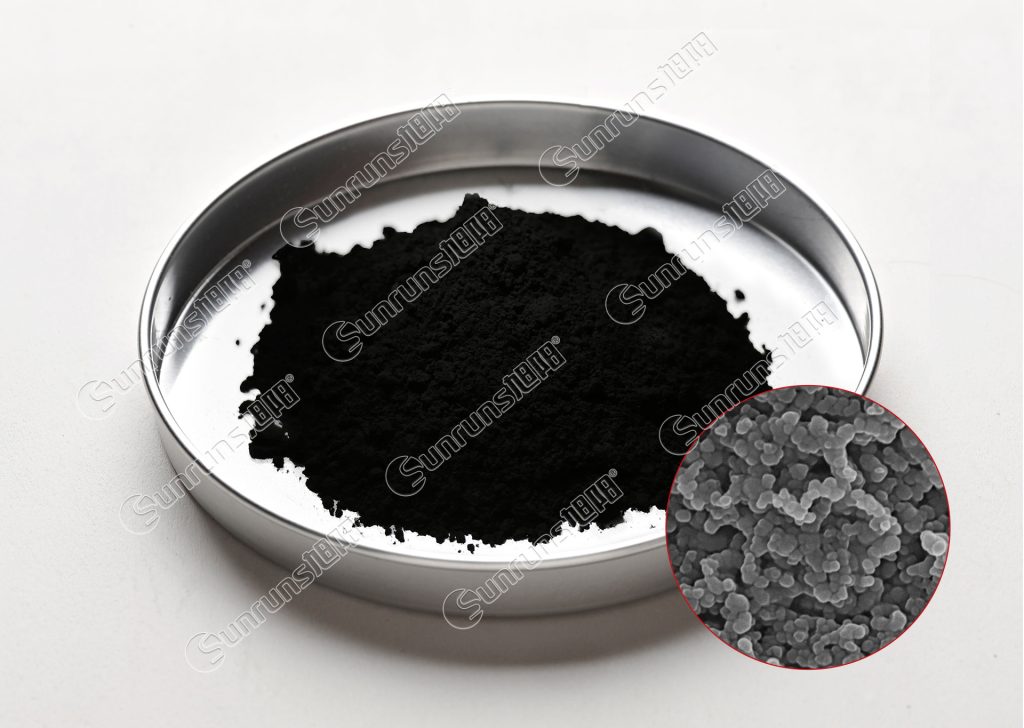
Key Characteristics:
- High surface area
- Fine particle size
- High tinting strength
Applications:
- Automotive coatings
- Printing inks
- Пластмассы
- Rubber products
Furnace Black is favored for its high dispersibility, making it ideal for applications where uniform distribution and high blackness are required.
2. Gas Black
Gas Black is produced using the partial combustion of gaseous hydrocarbons, typically in a controlled environment where a limited amount of oxygen is available. This process yields a relatively larger particle size compared to Furnace Black.
Key Characteristics:
- Larger particle size
- Lower surface area
- Lower tinting strength
Applications:
- Rubber (especially tires)
- Masterbatch for plastics
- Industrial coatings
Gas Black is often used in applications that require good durability and reinforcement, such as in tire production, due to its excellent resilience and weathering properties.
3. Natural Gas Black
Natural Gas Black is a type of carbon black produced through the partial combustion of natural gas as the primary feedstock. This method offers a more efficient and environmentally friendly production process compared to Furnace Black and Gas Black, as it generates lower emissions.
Key Characteristics:
- Moderate surface area
- Low impurity content
- Consistent quality
Applications:
- Ink formulations
- Coatings
- Rubber and plastics
Natural Gas Black offers a more sustainable alternative while still maintaining desirable properties, such as good dispersion and color strength, making it suitable for applications in both industrial and consumer products.
Заключение
The method of production significantly influences the properties and applications of pigment carbon black. Furnace Black is commonly used for high-tinting-strength applications, Gas Black is preferred for durability in rubber and industrial products, and Natural Gas Black provides an environmentally friendly alternative with consistent quality. Understanding these production methods is essential for selecting the right type of pigment carbon black for specific industrial applications